You Rock! Self Matters!
Freaky FridayYou Rock! Self Matters! is Burroughs Junior High’s self-esteem group, chaired by Ms. Pitt and attended by a small number of students. Initially presented through Hadley Fox’s dismissive view of its earnest methods and scant attendance, the group becomes more than a school activity when Hadley, inhabiting Ms. Pitt’s role, leads a meeting and hears Milly Albright describe the harm of being rejected by her brother. Its central work is to make the effects of other people’s judgments visible—and to create a setting in which those judgments can be met with empathy rather than ridicule.
Purpose and Place in School Life
The group is introduced as a remedy for feeling low: Milly encourages Hadley to stop by after school because, as she insists, the group “really does rock!” Hadley is unconvinced. She regards the gathering as an unappealing collection of students and jokes that a self-esteem group with tragically low enrollment could itself use a boost. That mismatch between the group’s affirming purpose and Hadley’s contemptuous first impression establishes her distance from its work before she has to take part in it.
The group is connected to Ms. Pitt’s broader role at school. Hadley knows it as Ms. Pitt’s unusual self-help activity, and Milly’s invitation makes clear that students see it as a place to go when they are feeling down. Its meeting is not a large or formal assembly: the participants gather after school in a library, where a few chairs have been placed in a circle. The modest setting and sparse attendance give the group an intimate scale, even as Hadley initially reads its smallness as a reason to dismiss it.
Hadley Takes Ms. Pitt’s Place
During the body swap, the group becomes one of the responsibilities Hadley must face while acting as Ms. Pitt. After she has struggled to address a class, Milly signals across the hall and points to her watch. Hadley then realizes that the group is meeting and that, in Ms. Pitt’s place, she is its chairperson. The reminder turns the group from something she had mocked at a distance into an immediate obligation she cannot avoid.
Hadley approaches the meeting as another task to get through, expecting that talking about “Feelings with a capital F” and offering positive reinforcement will suffice. She is also preoccupied with finding a way to reverse the body swap. In the brightly lit library, among posters devoted to Earth Day, the seasons, and literary figures, Milly has arranged the chairs in a circle; only a meager few students have arrived. Hadley apologizes for being late and tries to smile, but the students stare back blankly. Her attempt to imitate Ms. Pitt’s manner is visibly unsuccessful, and the scene exposes the difference between performing an adult’s role and understanding what its work requires.
Milly’s Account of Rejection
The meeting shifts when Milly describes an experience that has damaged her confidence. She had felt ordinary—not especially good about herself, but not especially bad—before going to see her brother Trey pitch at a high-school baseball game. Proud of him, she wanted others to know that the star pitcher was her brother. She wore a button with his picture, put on his jersey, and brought a sign to support him. His status mattered to her partly because she hoped his being admired might reflect well on her too.
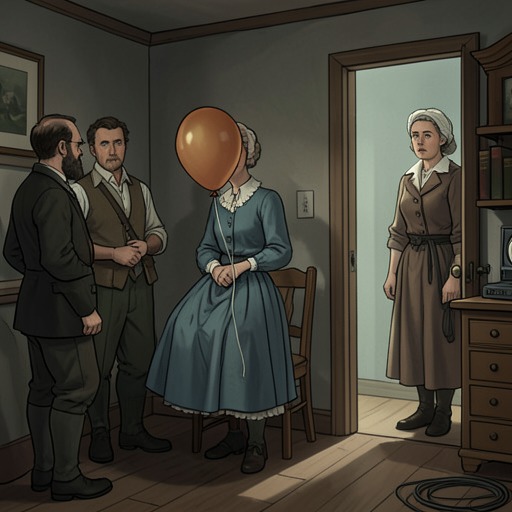
At the game, Jake Hinkle asked Trey whether Milly was his sister and pointed her out in the stands. Trey saw her in the jersey and with her sign and button, then shook his head and said she was not his sister. Milly cannot continue speaking after recounting his denial. Instead, she lets the air out of a balloon until it collapses into a limp strip of plastic, while the students remain silent and tears gather in her eyes. The group’s demonstration gives a concrete shape to the meeting’s subject: hurtful words can make a person’s sense of self feel as if it is losing air.
Recognition and Effect
Hearing Milly’s story changes Hadley’s response. She looks at Milly and feels that they are genuinely seeing one another; rather than continuing to treat the meeting as an awkward obligation, she stands and offers a hug. Milly rises to meet her, and the two embrace. Hadley apologizes for not having been as kind to Milly as she could have been. Milly answers by telling her that she is always nice, accepting the apology in a way that makes their exchange reciprocal rather than a lesson delivered by a chairperson to a student.
The encounter gives the group a function beyond general encouragement. Its circle makes space for a painful account that would otherwise remain private, while the students’ silence allows Milly’s story to land without interruption. For Hadley, who has approached the meeting as a performance to complete while thinking about the body swap, listening produces a change that imitation could not: she recognizes Milly’s vulnerability and responds with personal remorse. The episode also gives substance to the group’s premise that other people’s words affect self-esteem. The balloon is not merely an illustration; its gradual emptying accompanies Milly’s account of being publicly disowned, and its limp final state parallels the visible hurt in the room.
Narrative Significance
The group’s place in the story turns on a contrast between Hadley’s early assumptions and what she experiences when she must lead a meeting. At first, low attendance and earnest self-help language make the group seem ridiculous to her. As Ms. Pitt’s substitute, Hadley discovers that its value does not depend on having a crowd or on delivering a polished speech. It emerges through attention to one student’s specific pain, followed by an apology and an embrace.
The meeting also complements Hadley’s later recognition of her own self-image. In Ms. Pitt’s body, she studies Hadley’s appearance from an unfamiliar perspective and realizes that she had judged herself more harshly than the reflection warrants. At the group, she encounters a different kind of judgment: Milly’s brother’s denial has made Milly question her place in her own family. Together, these episodes underscore how identity is shaped by other people’s responses, while suggesting that a moment of honest recognition can interrupt the harm those responses cause.